
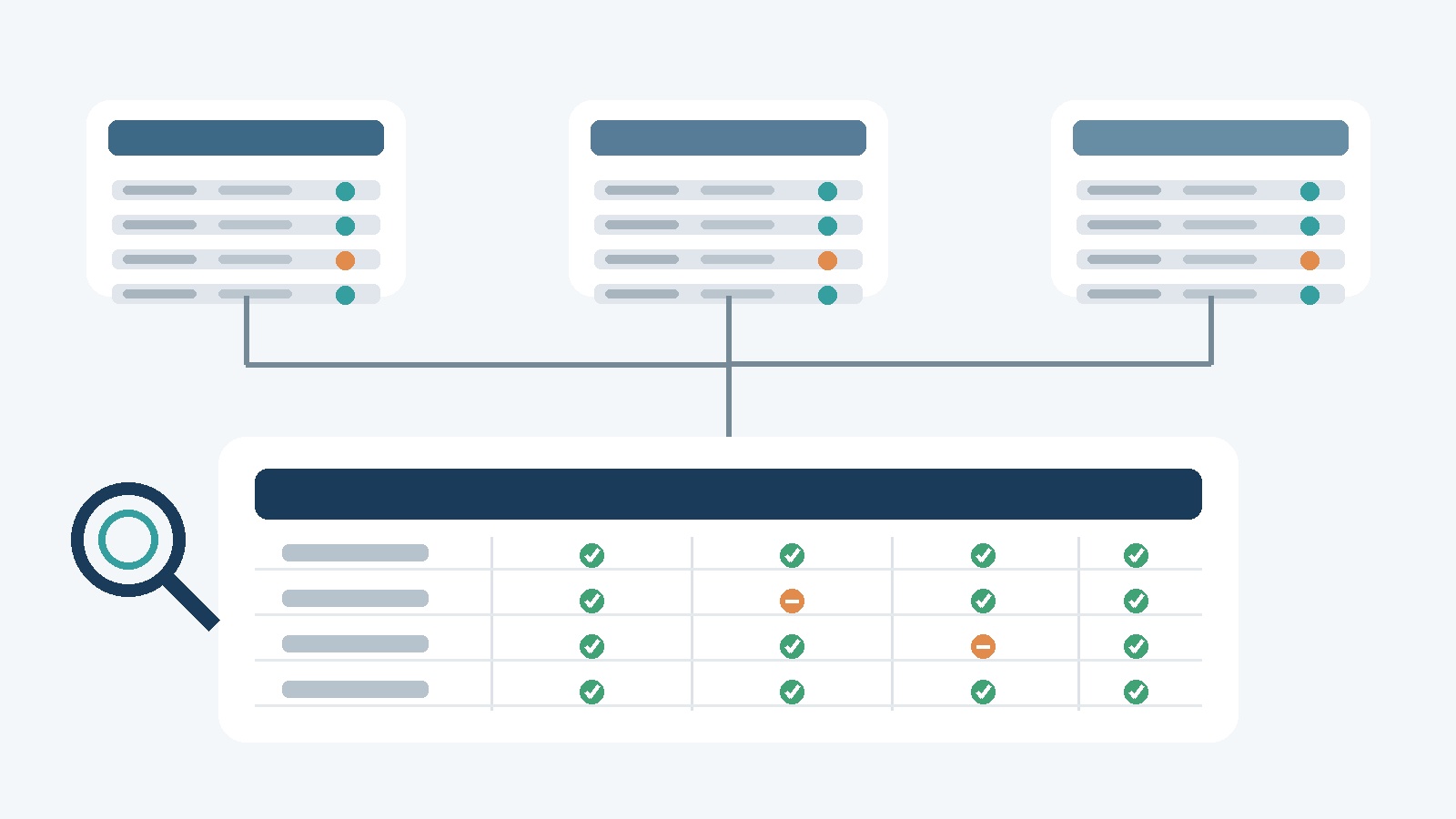

Open enrollment exposes every weakness in a benefits data process at once. An employee appears eligible in the HRIS but not with the insurer. A payroll deduction continues after coverage ends. A dependant exists in one vendor file but not another. An invoice includes terminated employees. A renewal model uses a census that no longer matches payroll.
These problems are common in multinational benefits because data is spread across HRIS platforms, payroll systems, brokers, carriers, administrators, local entities, and spreadsheets. Mercer’s current benefits technology research highlights data integration and centralized benefits operations as priorities for employers.
A data audit before open enrollment is more than housekeeping. It is a control process that reduces enrollment errors, improves pricing data, and gives HR and finance a cleaner source of truth. This article is general operational guidance; privacy, employment, benefits, tax, and data-protection requirements vary by country.
Define the Audit Population First
Start with the population that should be in scope for the upcoming enrollment or renewal. List every employing entity, country, worker category, employment status, and benefit population that feeds the program.
Separate active employees, employees on leave, expatriates, permanent transfers, local hires, eligible contractors if applicable, retirees, continuation populations where relevant, and dependants. If different plans use different eligibility rules, document those distinctions before comparing files.
Reconcile HRIS Demographics
The HRIS should generally be the starting point for core employee attributes. Review legal name, employee ID, employing entity, work location, residence location where relevant, hire date, termination date, employment status, worker type, compensation fields used for benefits, and manager or cost-center data used for reporting.
Identify blank values, impossible dates, duplicate IDs, inconsistent country codes, and employees assigned to the wrong entity. Standardize formats before sending data to vendors.
Reconcile Eligibility Rules Against Actual Enrollment
For each benefit, compare the documented eligibility rule with who is actually enrolled. Common mismatches include employees enrolled before a waiting period ends, terminated workers left active, employees excluded because of an outdated location rule, and dependants carried after they cease to be eligible.
Use exception categories rather than manually fixing records without explanation. Examples include eligibility error, delayed termination, pending documentation, approved exception, mobility transition, leave-of-absence treatment, or vendor processing issue.
Reconcile Payroll Deductions
Compare employee benefit elections and coverage tiers to payroll deductions. Check whether the correct amount is being withheld, whether employer contributions are calculated correctly, and whether deductions start and stop on the right payroll cycle.
Pay particular attention to new hires, terminations, unpaid leave, midyear life events, and employees who changed countries or payroll systems. These are common points where benefits and payroll timelines diverge.
Reconcile Vendor Enrollment Files
Compare the carrier or vendor membership file to the HRIS and approved enrollment elections. Look for missing employees, duplicate members, incorrect coverage tiers, wrong effective dates, outdated dependant information, and members associated with the wrong country or entity.
Do not assume a successful file transmission means every record was accepted. Review rejection reports and error queues, then assign owners and deadlines for unresolved records before enrollment communications begin.
Reconcile Dependants and Beneficiaries
Dependant data is often less complete than employee data. Review relationship type, date of birth, eligibility documentation where required, coverage election, and effective date. Confirm whether age limits or country-specific dependant definitions apply.
For retirement or life benefits, beneficiary records may live in another system. Confirm whether employees who are supposed to designate beneficiaries have done so and whether provider records match the company’s process.
Reconcile Invoices to Enrollment
Vendor invoices are a second source of truth and often reveal problems that enrollment files miss. Compare billed members to active enrollment, rates to contracted rates, coverage tiers to elections, and invoice effective dates to employment events.
Flag terminated employees still being billed, employees missing from the invoice, duplicate charges, incorrect family tiers, retroactive adjustments, and unexplained credits. Finance should be able to tie benefits expense to the member-level detail supporting it.
Reconcile Plan Documents and System Configuration
Benefits systems frequently retain rules from prior plan years. Compare the current plan document, policy schedule, or approved benefit specification to what is configured in the HRIS, enrollment platform, payroll, and vendor systems.
Review eligibility, waiting periods, employer contributions, employee deductions, coverage tiers, benefit limits, effective dates, termination rules, and special-population exceptions. A clean census cannot compensate for outdated rule configuration.
Reconcile Renewal Dates, Notice Deadlines, and Owners
A data audit is also a good time to validate the benefits register. Confirm the plan name, country, carrier, broker, policy or contract number, renewal date, notice deadline, current rates, fee structure, responsible internal owner, and vendor contact.
If the company cannot identify the current contract and notice date, renewal risk is already higher than it should be.
Audit Mobility Events Separately
Employees who move countries create cross-system changes: employing entity, payroll, benefit eligibility, insurer membership, tax status, home and host coverage, dependants, and sometimes retirement participation.
Create a mobility exception report for employees who relocated during the year or are scheduled to relocate before the next plan year. Confirm old coverage end dates and new coverage effective dates to avoid gaps or unintended duplicate coverage.
Review Data Privacy and Access
Benefits data can include health, family, compensation, financial, and identity information. Include a data-access review: who can see each field, which vendors receive it, how files are transferred, where they are stored, and how long they are retained.
Do not copy more personal information into reconciliation spreadsheets simply because it is available. Use the minimum data needed to resolve each issue.
Create a Single Exception Register
Instead of maintaining separate email threads for payroll, carrier, and HRIS issues, use one exception register. Each record should identify the employee or population, affected benefit, source systems, discrepancy, owner, due date, status, and resolution.
Group exceptions by cause. If dozens of records share the same problem, fix the process or integration rather than treating every employee as a one-off case.
A Pre-Enrollment Benefits Data Audit Checklist
- Population: entities, countries, statuses, and worker categories are defined.
- HRIS: IDs, dates, locations, entities, and compensation fields are complete and standardized.
- Eligibility: enrolled populations match current plan rules.
- Payroll: deductions and employer contributions match elections and effective dates.
- Vendors: member files match HRIS records and rejection reports are cleared.
- Dependants: relationship, age, status, and coverage data are current.
- Invoices: billed members and rates reconcile to enrollment.
- Documents: current plan terms match system configuration.
- Renewals: dates, notice deadlines, rates, vendors, and owners are confirmed.
- Mobility: cross-border transfers have clean benefit effective dates.
- Privacy: access, transfers, and retained data are appropriate.
- Exceptions: every unresolved discrepancy has an owner and deadline.
How Redii Supports a Cleaner Global Benefits Data Model
Redii centralizes provider, eligibility, member, renewal, and cost information across global benefits programs. Its Benefits Administration offering gives HR a centralized benefits register and operating view across vendors and countries.
That centralized layer does not eliminate the need to reconcile payroll, HRIS, and carrier records. It makes the control process easier by reducing reliance on disconnected spreadsheets and inboxes.
Audit Before Employees Find the Errors
The worst time to discover a benefits-data problem is when an employee is trying to enroll, access care, or understand a payroll deduction. A structured pre-enrollment audit moves that discovery earlier.
Reconcile the population, eligibility, payroll, vendors, invoices, plan rules, renewal records, mobility events, and privacy controls. Then turn every mismatch into an owned exception. That is how a benefits team enters enrollment with data it can defend rather than data it merely hopes is correct.
Employer Decision Framework
Use one exception register across HR, payroll and vendors.
The useful next step is to convert the article's concepts into a documented employer decision, with clear owners, evidence and review dates.
- Reconcile employee identifiers and effective dates across every system.
- Assign an owner and deadline to each discrepancy.
- Limit access to sensitive benefits data and document cross-border transfers.
For implementation, see Redii Benefits Administration. Redii can help administer the approved design, but employers should obtain legal, tax, investment and insurance advice for the countries and employee populations involved.