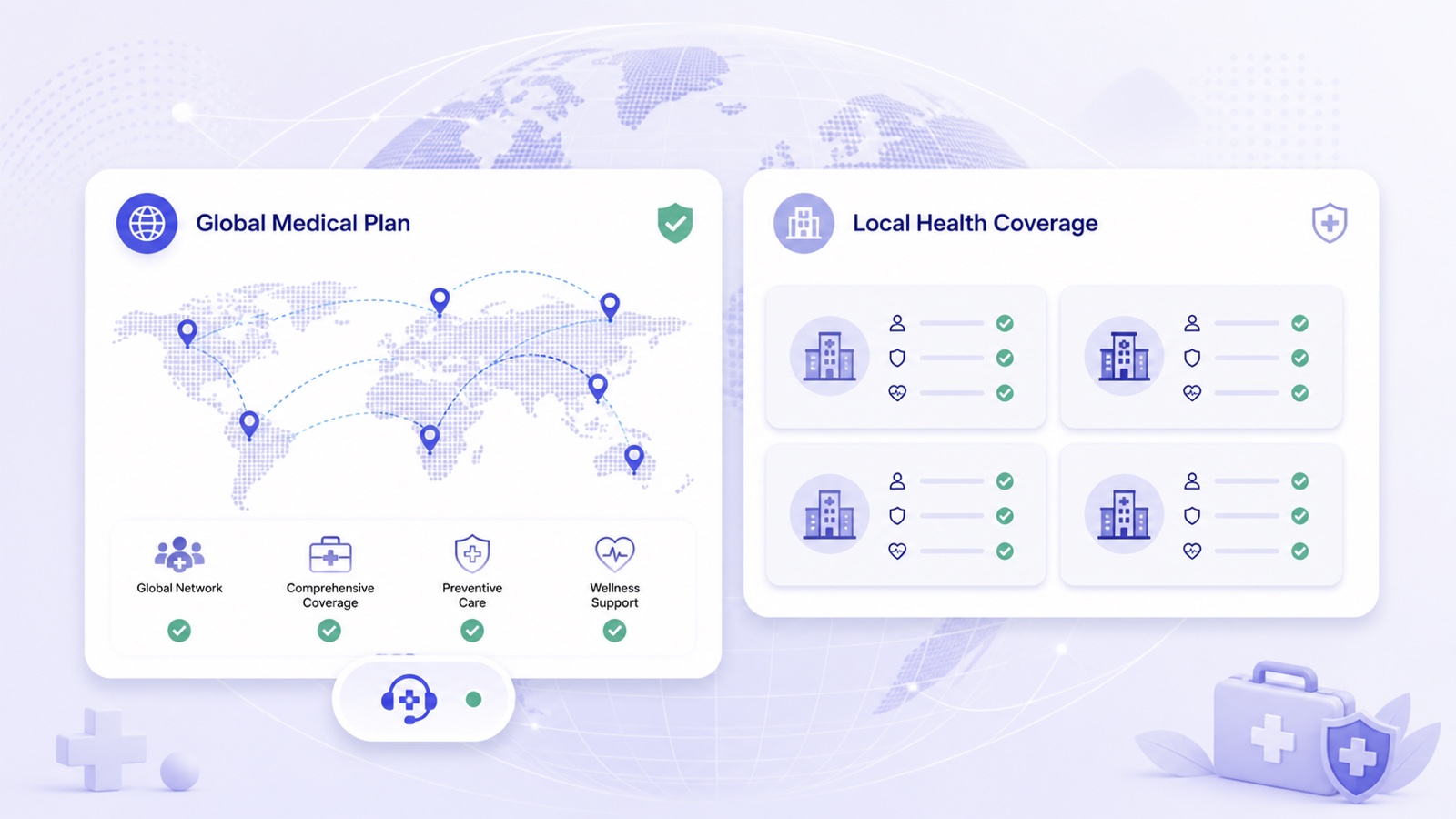



For an employee abroad, the difference between direct billing and reimbursement can determine whether accessing healthcare feels routine or financially stressful. Both models can work, but they create very different experiences at the point of care. Direct billing can reduce the need for employees to front large medical costs, while reimbursement gives insurers more flexibility when a provider is outside the cashless network.
That distinction matters because network participation, preauthorization, deductibles, local payment practices, and the type of treatment can all change how a claim is handled. Cigna says it pays many participating providers and hospitals directly when direct billing is available and also maintains a guarantee-of-payment process for providers. See Cigna's international coverage guidance and guarantee-of-payment process.
This article is general benefits-planning information. Coverage terms, claims procedures, and provider arrangements vary by insurer, policy, country, and treatment.
What Direct Billing Actually Means
Direct billing generally means the insurer or administrator settles an eligible medical bill directly with the healthcare provider instead of requiring the employee to pay the entire bill and submit a claim afterward. In practice, direct billing may depend on whether the provider is in network, whether the treatment requires preauthorization, whether the policy includes deductibles or coinsurance, and whether the provider accepts the insurer's settlement process.
It is better to think of direct billing as a payment pathway rather than a blanket promise that the employee will never pay anything. Even with direct settlement, the employee may still owe a deductible, copayment, coinsurance amount, excluded service, or cost above a policy limit.
What Reimbursement Means
Under a reimbursement model, the employee typically pays the provider first, obtains the required invoice and medical documentation, submits a claim, and receives reimbursement for eligible expenses under the policy. This route is often necessary when a provider does not participate in the insurer's direct-billing network.
Reimbursement is not inherently inferior. It can expand provider choice and can work well for routine outpatient expenses when amounts are modest and claims submission is fast. The employee-experience problem appears when the employee is expected to finance a large bill, navigate unfamiliar documentation, wait for reimbursement, or absorb currency-conversion costs while the claim is processed.
Compare Network Depth, Not Just Network Size
A carrier may advertise a large global provider network, but the more useful employer question is whether direct billing is available where employees actually live and travel. Review provider density by country and city, and separate hospitals from outpatient clinics, specialists, pharmacies, mental-health providers, and maternity providers.
Ask whether the directory clearly distinguishes providers with direct-billing arrangements. A global network count is much less useful if employees still need to pay first in the cities where most of the workforce is located.
Understand Guarantees of Payment
For planned inpatient or high-cost care, direct billing often requires a guarantee of payment. The insurer reviews eligibility and the proposed treatment, then confirms to the hospital that it will pay covered costs under the policy terms.
Employers should ask how quickly guarantees of payment are issued, how emergencies are handled, and who coordinates with the hospital. A plan can have a strong provider network and still create friction if the guarantee-of-payment process is slow or unclear.
Compare Preauthorization Rules
Direct billing and preauthorization are related but not identical. Preauthorization is the insurer's approval process for certain treatments; direct billing is the payment mechanism. Some services may require approval even if the provider participates in the network.
During carrier evaluation, obtain a list of services requiring advance approval and ask what happens when an employee receives emergency treatment before approval can be obtained. Review inpatient care, imaging, maternity, behavioral health, specialty drugs, rehabilitation, and evacuation.
Model the Employee's Out-of-Pocket Exposure
Employers should test real-life scenarios rather than comparing only premiums and benefit limits. Consider a scheduled hospital procedure, urgent outpatient care while traveling, a dependant receiving specialist treatment, and an employee choosing an out-of-network physician.
For each scenario, ask how much the employee must pay at the point of care, what documentation is required, how long reimbursement typically takes, which currency is used, and who helps resolve an incorrect provider bill.
Check Currency and Reimbursement Mechanics
Cross-border claims add another layer: an employee may pay in one currency while the insurer reimburses in another. Employers should understand which exchange rate is used, whether bank fees are reimbursed, whether employees can choose a reimbursement currency, and what happens when exchange-rate movements create a material difference between the amount paid and received.
Evaluate the Claims Experience
Ask carriers for operational metrics where available: reimbursement turnaround times, direct-billing usage, guarantee-of-payment response times, claims escalation paths, digital submission capabilities, and common reasons claims are delayed.
The practical question is whether both payment routes are understandable and reliable. Excellent direct billing with a weak reimbursement fallback can still create employee frustration outside the network.
A Practical Employer Comparison Framework
- Direct-billing footprint: Is cashless access available in the countries and cities where employees actually live?
- Provider depth: Are hospitals, specialists, outpatient clinics, pharmacies, and behavioral-health providers represented?
- Guarantees of payment: How quickly are they issued and how are emergencies handled?
- Preauthorization: Which services require approval, and how clearly is that communicated?
- Employee cost exposure: What deductibles, copays, coinsurance, exclusions, or excess charges remain payable?
- Reimbursement speed: How quickly are complete claims typically paid?
- Currency treatment: How are exchange rates, reimbursement currencies, and bank fees handled?
- Escalation: Who helps when a provider refuses direct billing or a claim is disputed?
How Redii Fits Into International Healthcare Administration
Redii helps multinational employers maintain a centralized operating view of global benefits, including providers, eligible populations, plan records, costs, and renewal dates. That administration layer is useful when healthcare programs combine global carriers, local policies, brokers, and country-specific processes.
With one source of truth, HR can document which populations use which plan, where direct billing is expected, which vendors own escalations, and when coverage or renewal decisions need review. Redii does not replace the insurer; it helps employers manage the complexity around those relationships. Learn more about Redii's global benefits platform.
The Best Plan Makes Both Payment Paths Work
For international employers, the right question is not simply whether an insurer offers direct billing. It is whether employees can access appropriate care without unnecessary financial exposure, and whether the reimbursement fallback is fast and predictable when direct settlement is unavailable.
Compare the network where employees actually live, the guarantee-of-payment process, preauthorization rules, employee cost sharing, reimbursement mechanics, and escalation support. That is the difference between a policy that looks global on paper and a healthcare benefit that works when an employee actually needs it.
Employer Decision Framework
Compare the employee payment journey, not only the premium.
This page has been refreshed around a specific employer decision rather than a broad technology or benefits trend. The practical question is how the organization should design, govern and administer the benefit for a defined employee population.
- Test direct-billing access in the cities employees actually use.
- Document guarantees of payment and preauthorization rules.
- Model employee cash exposure, currencies and reimbursement turnaround.
For implementation, see Redii International Health Insurance. Redii can help administer the approved design, but employers should obtain legal, tax, investment and insurance advice for the countries and employee populations involved.